
Home → Knowledge → Curiosity, Archetypes and Brands
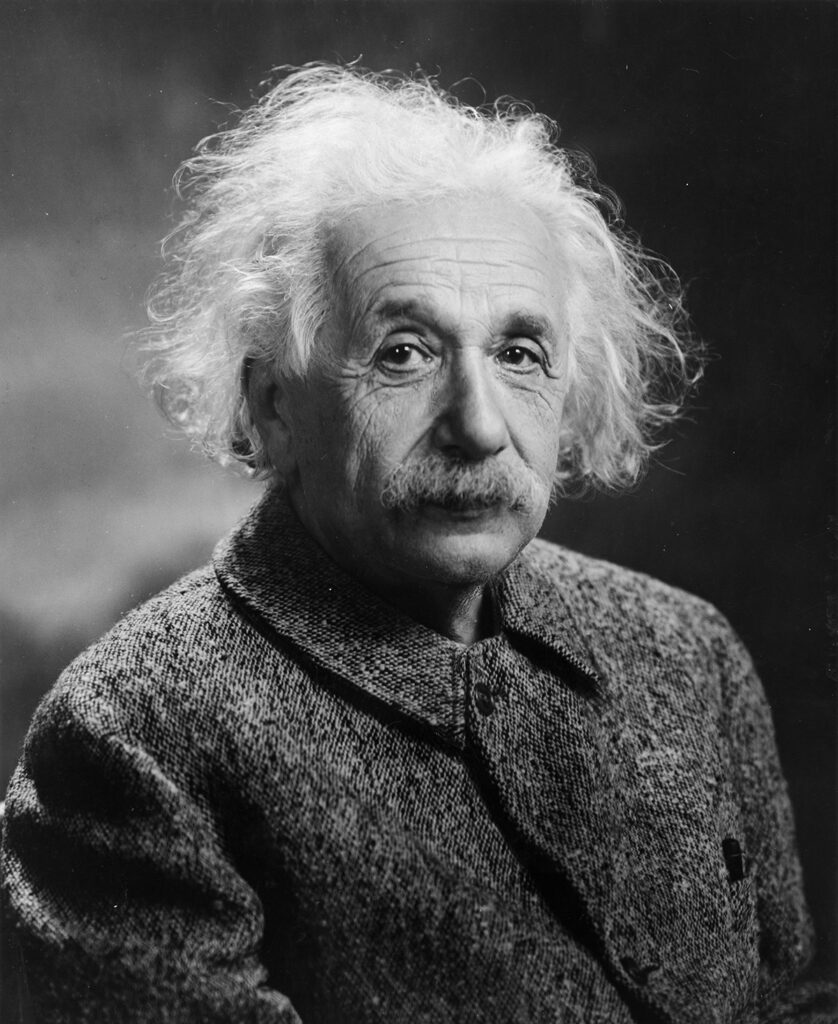
I Have No Special Talents. I Am Only Passionately Curious.
Albert Einstein — Letter to Carl Seelig, 11 March 1952.
KNOWLEDGE · CONCEPTS & PERSPECTIVES
Curiosity, Archetypes and the Human Nature of Brands
By Eduardo Trauer · Published on 1 November 2026
Curiosity invites us to look beyond what is immediately visible. It challenges established explanations, connects seemingly distant ideas and encourages us to explore not only how things work, but why they matter.
In the world of brands, this curiosity leads us to a fundamental question: what makes a brand genuinely human?
EDUARDO TRAUER · KNOWLEDGE & RESEARCH
OUR UNDERSTANDING of brands has traditionally relied on analytical thinking: data, classifications, consumer behaviour, market segmentation and measurable performance. This approach, widely adopted in marketing practice throughout the Twentieth Century, contributed to our understanding of markets but does not, on its own, encompass every dimension of human experience. Although essential, these elements cannot fully explain the emotional, symbolic and cultural relationships that people may establish with brands.
There is another dimension to explore: the dialogue between analytical and intuitive thinking. Although these processes are often metaphorically associated with the left and right hemispheres of the brain, neither is exclusive to one hemisphere or the other. Rather than opposing reason and intuition, this dialogue invites us to integrate them. Data helps us understand patterns; imagination helps us explore meaning.
Archetypes offer a bridge between these dimensions.
What are Archetypes?
In analytical psychology, Carl Gustav Jung (1959) relates archetypes to the collective unconscious, understanding them as fundamental structures manifested through images, symbols and recurring patterns of human experience.
In Psychology and Religion, Jung (1938) describes archetypes as forms or images of a collective nature, appearing across different cultures as components of myths and also as individual manifestations of unconscious origin.
The Oxford Dictionary of Literary Terms (Baldick, 2008) offers a complementary definition: archetypes are symbols, themes, situations or character types that recur across different times and places in mythology, literature, folklore, dreams and rituals, suggesting fundamental elements of human experience.
Jon Howard-Spink, as cited in Hartwell and Chen (2012), characterises an archetype as a universally familiar character or situation capable of transcending time, place, culture, gender and age, representing an enduring truth.
These perspectives invite us to understand archetypes as more than simple classifications, recognising them as symbolic patterns that contribute to how we interpret experiences, recognise values and construct meaning.
Archetypes are not stereotypes. While stereotypes simplify and restrict our understanding of people, archetypes allow us to explore the complexity of human experience, including its contradictions, possibilities and diverse manifestations.
What, then, is a Brand?
Noah Hawley, as cited in Hartwell and Chen (2012), offers a perspective that goes beyond the visual or functional identification of a product. For him, a brand involves the distinction between the product itself and the subjective experience surrounding it, shaped by personal memories and cultural associations.
Marty Neumeier (2006), in The Brand Gap, captures this understanding in a particularly relevant statement:
“Your brand isn’t what you say it is. It’s what they say it is.”
A brand, therefore, is not limited to the identity an organisation intends to communicate. It also takes shape through the perceptions, experiences and interpretations of the people who engage with it.
Carol S. Pearson and Margaret Mark (2001), in The Hero and the Outlaw, connect archetypes with brand development by exploring how shared symbolic patterns can contribute to brand identity, differentiation and meaning.
From this perspective, archetypes do not replace research, data or strategic thinking. They broaden our capacity to understand the human dimensions involved in building a brand.
Authenticity, Ethics and Responsibility
However, an archetype does not make a brand authentic. Its behaviour does.
A brand’s identity cannot be separated from the ethical principles and moral values that guide its decisions. Authenticity requires consistency between what an organisation communicates, what it believes and, above all, what it actually does.
Understanding archetypes also brings responsibilities. Their ability to evoke meaning and emotion should never be mistaken for permission to manipulate perceptions or behaviour.
A brand may use symbolic narratives to inspire identification, but its legitimacy depends on its ability to translate values into actions, respect people and recognise its responsibilities towards society.
This understanding brings archetypes closer to a broader perspective on marketing, one in which value creation cannot be separated from knowledge, innovation and ethical responsibility. It is within this context that the concept of marketing we developed and presented at IFKAD 2024 finds its place:
“Marketing is the art of generating value through innovation and enchantment by ethically and responsibly integrating the strategic dimensions of solution, access, value and education. It is customer-centric, seeking not only to satisfy but also to inspire, thereby contributing positively to society and enriching each individual’s experience” (Trauer & Valdati, 2024, p. 228).
In this sense, ethics should not merely be another attribute of brand positioning. It must be embedded in the decisions that sustain the very existence of an organisation.
Perhaps the most significant contribution of archetypes to branding lies not in their ability to classify a brand, but in the opportunity they offer to question its purpose, understand its relationships and recognise its responsibilities.
Curiosity begins the dialogue. Knowledge deepens it. Creativity expands it. Ethics gives it direction.
A meaningful brand is not recognised merely by its symbols, but understood through its actions.
References
Baldick, C. (2008). The Oxford dictionary of literary terms (3rd ed.). Oxford University Press.
Hartwell, M., & Chen, J. C. (2012). Archetypes in branding: A toolkit for creatives and strategists. HOW Books.
Jung, C. G. (1938). Psychology and religion. Yale University Press.
Jung, C. G. (1959). The archetypes and the collective unconscious (R. F. C. Hull, Trans.). Princeton University Press.
Mark, M., & Pearson, C. S. (2001). The hero and the outlaw: Building extraordinary brands through the power of archetypes. McGraw-Hill.
Neumeier, M. (2006). The brand gap: How to bridge the distance between business strategy and design (Rev. ed.). New Riders.
Trauer, E., & Valdati, A. de B. (2024). Proto-personas: Innovation and agility in the process of identifying the ideal customer. In G. Morales-Alonso & G. Schiuma (Eds.), Proceedings IFKAD 2024: Translating knowledge into innovation dynamics (pp. 225–241). Institute of Knowledge Asset Management.
Cite this article
ABNT
TRAUER, Eduardo. I have no special talents. I am only passionately curious. EdoMind, 1 Nov. 2026. Available at: https://edomind.com/curiosity-archetypes-human-nature-brands/. Accessed on: [day month year].
APA
Trauer, E. (2026, November 1). I have no special talents. I am only passionately curious. EdoMind. https://edomind.com/curiosity-archetypes-human-nature-brands/
Harvard
Trauer, E. (2026) ‘I have no special talents. I am only passionately curious.’, EdoMind, 1 November. Available at: https://edomind.com/curiosity-archetypes-human-nature-brands/ (Accessed: [day month year]).
KNOWLEDGE · CONCEPTS & PERSPECTIVES
Curiosity, meaning and the value we create
Understanding a brand means looking beyond what it communicates. It requires us to explore the knowledge, experiences and values that shape its relationships with people.
Archetypes can help us recognise symbolic patterns and explore the meanings associated with brands. Yet their relevance depends on how these insights inform decisions, inspire innovation and contribute to meaningful value creation.
In this perspective, knowledge and creativity are inseparable from ethical responsibility. A brand’s significance emerges not merely from the stories it tells, but from the consistency between its purpose, its decisions and its actions.
Curiosity opens new perspectives. Knowledge gives them depth. Creativity brings them to life. Ethics gives them direction.
Reflections on archetypes, brand meaning and ethical responsibility, drawing on the marketing concept developed by Eduardo Trauer and Aline de Brittos Valdati and presented at IFKAD 2024 in Madrid.